


OEM Industrial Power Supply Customization for Equipment Manufacturers
Standard industrial power supplies do not always fit OEM equipment designs. Different machines may need specific output ratings, connectors, or housing dimensions. GVE offers industrial power supply solutions and OEM/ODM customization for equipment manufacturers.
When Does Industrial Equipment Need a Custom Power Supply?
A standard power supply is often suitable when its electrical ratings and physical dimensions match the equipment.
Customization becomes relevant when a machine has requirements that available models cannot meet. These may involve output configurations, cable connections, mounting space, or operating conditions.
|
Equipment requirement |
Possible solution |
|
Standard electrical and mechanical specifications match |
Select an existing GVE model |
|
Different output configuration required |
Discuss electrical customization |
|
Connector or cable arrangement does not fit |
Review connection options |
|
Limited installation space |
Consider housing and mounting requirements |
|
Special operating conditions |
Confirm technical feasibility |
Not every project requires a completely new design. GVE's existing industrial power supply range offers a starting point for OEM equipment selection.
Define Electrical Requirements Before Customization
Electrical specifications determine whether a custom industrial power supply can support equipment operation.
For OEM projects, output voltage and current are only part of the requirements. Input compatibility, changing loads, and operating conditions also affect the final configuration.
Confirm Input and Output Specifications
Start with the equipment's actual electrical requirements.
Input voltage must match the intended power source. Output voltage and current must support connected components during normal operation.
Peak demand also matters. Motors, control systems, and other electrical loads may draw different amounts of power during startup or operation.
Before discussing customization, prepare the following information:
|
Electrical parameter |
Information required |
|
AC input |
Required voltage and frequency |
|
DC output |
Output voltage and rated current |
|
Operating load |
Normal and maximum power demand |
|
Peak demand |
Startup or temporary load requirements |
|
Application |
Equipment type and operating conditions |
Incomplete specifications can delay product selection. A requested output rating may appear suitable on paper but fail to reflect actual equipment demand.
GVE's industrial power supply range includes several models with different electrical ratings. For example, its GP3000, GM800, and GP250 series list 200–240VAC input configurations.
However, input ratings alone cannot determine whether a model fits an OEM application. Output specifications must also be confirmed.
Match Power Supply Performance to Equipment Operation
Some industrial machines operate continuously. Others experience frequent startup cycles or changing loads.
These operating patterns affect power supply selection.
For equipment with variable demand, confirm that the selected power supply can maintain output within its specified limits. Continuous-load applications also require attention to temperature and cooling conditions.
Protection functions are another consideration. Overcurrent, overvoltage, and overtemperature protection may be relevant depending on equipment requirements.
GVE discusses these factors in its industrial power supply selection materials. Specific functions and operating limits must be verified for the selected model.
A suitable electrical configuration should support the machine's expected operating conditions without relying on unnecessary capacity.
Customize Connectors, Housing, and Installation Details
Electrical compatibility does not guarantee that a power supply will fit the equipment.
Connector design, cable routing, housing dimensions, and mounting arrangements can affect installation. These details are particularly relevant when a power supply becomes part of an OEM machine assembly.
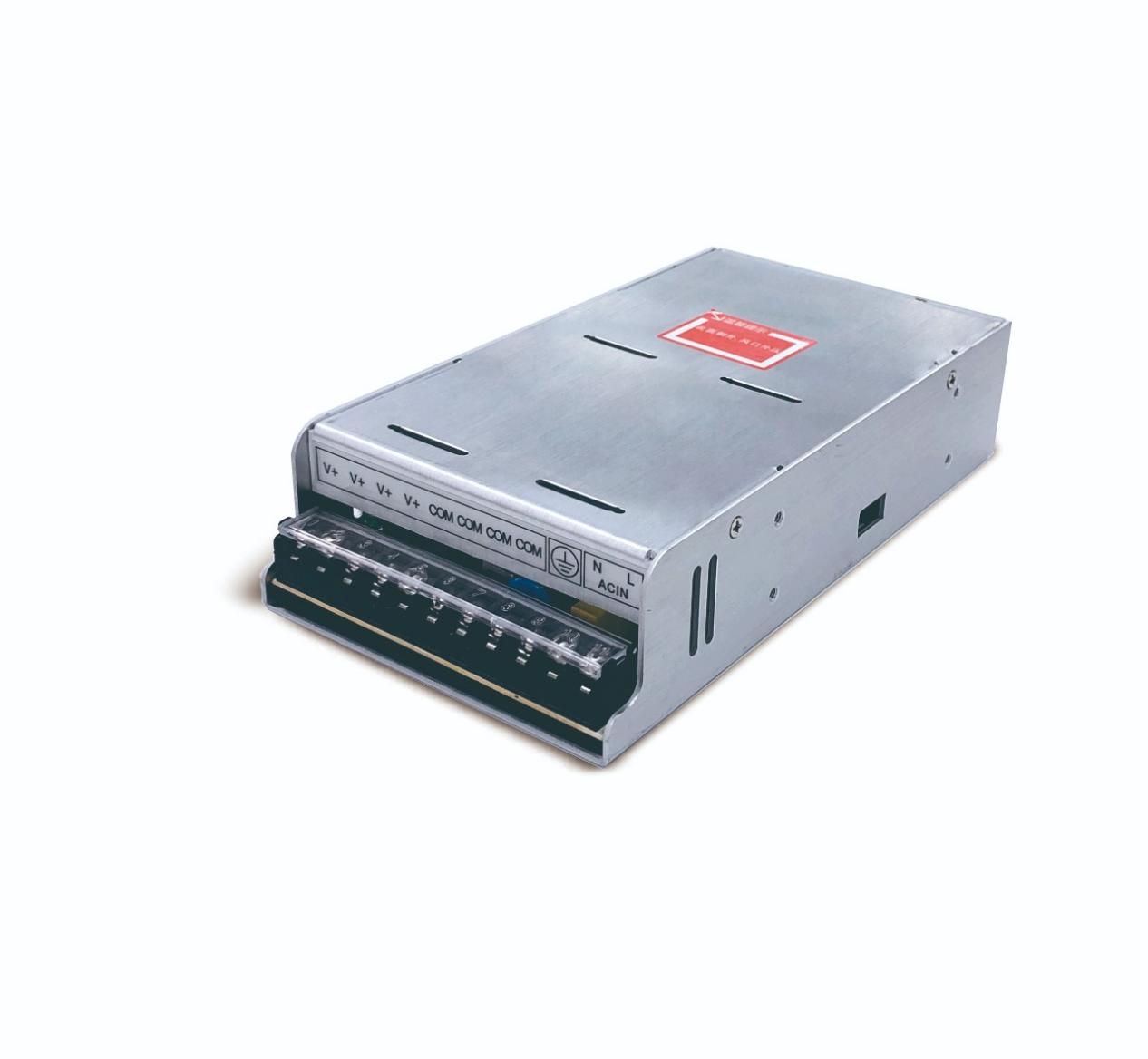
Connector and Cable Requirements
A standard industrial power supply may meet electrical requirements but use a connector that does not match the equipment.
Changing the connection arrangement may be more practical than redesigning the entire power supply.
Before requesting customization, confirm connector type, cable length, output connection position, and available routing space.
For equipment assembled in batches, consistent connector specifications also help reduce installation errors.
GVE supports discussions about connector and cable configurations for OEM power supply projects. Available options depend on the selected model and technical requirements.
Housing Size and Mounting Compatibility
Installation space can limit power supply selection.
An enclosure may be too large for the equipment cabinet. Mounting holes may not align with the machine structure. Restricted airflow can also affect thermal performance.
These issues are easier to address before a custom configuration is approved.
GVE's industrial power supply catalog includes models with different dimensions. GP360, for example, is listed as a customized industrial power supply with multiple dimensional configurations.
For OEM equipment, housing dimensions should be reviewed alongside electrical ratings, cooling needs, and mounting requirements.
A custom housing arrangement must still support safe operation within the selected product's technical limits.
Choose a GVE Industrial Power Supply for Your OEM Project
GVE offers industrial power supply models for different equipment applications. Its range includes GP3000, GM1500, GM800, GP500, GP360, and GP250 series.
Existing models provide a useful starting point when discussing an OEM project.
|
GVE model |
Listed AC input |
Dimensions |
|
GP3000 |
200–240VAC, 50/60Hz, 20A |
342 × 209 × 82 mm |
|
GM800 |
200–240VAC, 50/60Hz, 10A |
241 × 124 × 66 mm |
|
GP360 |
200–240VAC, 50/60Hz, 5A |
199 × 112 × 49 mm or 215 × 115 × 50 mm |
|
GP250 |
200–240VAC, 50/60Hz, 4A |
188 × 100 × 30 mm or 199 × 112 × 49 mm |
These catalog specifications help compare input requirements and installation dimensions. They do not establish output suitability or guarantee customization availability.
GVE's industrial power supply collection contains additional product information.
For OEM projects, manufacturers can discuss whether an existing model meets their requirements or whether electrical and mechanical adjustments are necessary.
From Custom Specifications to Sample Approval
A custom industrial power supply project begins with clear equipment requirements.
Once electrical and mechanical specifications are available, manufacturers can discuss potential solutions with GVE.
Review Customization Requirements
Share the intended application, input and output specifications, installation dimensions, and connection requirements.
GVE can use this information to discuss available models and possible customization options.
Any proposed changes should be reviewed against equipment requirements before sample approval.
Evaluate the Proposed Configuration
A custom configuration needs evaluation under actual equipment conditions.
Confirm electrical output, installation fit, thermal behavior, and relevant protection functions. Results should be compared with the agreed specifications.
For more detailed guidance on sample evaluation, refer to GVE's industrial power supply reliability content.
Prepare for Bulk Production
After a configuration is approved, purchasing and engineering teams need a consistent product specification.
Confirm the selected model, agreed modifications, required documents, and expected order quantity.
This helps keep technical requirements clear when moving from sample evaluation to bulk purchasing.
What to Prepare Before Requesting an OEM Quotation
Providing complete project information helps GVE understand the required power supply configuration.
|
Information |
Details to provide |
|
Equipment application |
Machine type and operating environment |
|
Electrical requirements |
AC input, DC output, and load conditions |
|
Mechanical requirements |
Dimensions, mounting, connectors, and cables |
|
Documentation needs |
Applicable market and compliance requirements |
|
Purchasing plan |
Estimated quantity and project schedule |
For projects requiring special electrical or mechanical configurations, GVE can discuss available customization options based on the supplied requirements.
Conclusion
OEM industrial power supply customization begins with clear electrical specifications, suitable connectors, and installation requirements. As an experienced AC/DC power supply manufacturer, GVE offers industrial power supply solutions and OEM/ODM customization for equipment manufacturers. Contact GVE today to discuss your custom power supply requirements and request a quotation for your OEM project.
FAQs
Can GVE modify an existing industrial power supply model?
GVE supports OEM/ODM customization discussions for industrial power supply projects. Possible modifications depend on the selected model, electrical specifications, and mechanical requirements.
Does a custom industrial power supply require a completely new design?
Not necessarily. Some OEM projects can use an existing model with selected modifications. Others may require a different configuration. GVE can discuss suitable options based on your equipment requirements.
What affects the cost of an OEM industrial power supply?
Output specifications, connector types, housing design, order quantity, and testing requirements can influence customization costs. Providing detailed project specifications helps GVE assess your requirements and prepare a quotation.
How can I request a custom industrial power supply from GVE?
Send GVE your equipment application, input and output specifications, installation requirements, and estimated order quantity. Contact GVE to discuss customization options and request a quotation.