


Standard vs Custom Industrial Power Supplies for OEM Equipmen
Choosing between standard and custom industrial power supplies depends on equipment requirements, project costs, and production plans. GVE offers industrial power supply solutions and OEM/ODM customization for different equipment applications.
Standard vs Custom Industrial Power Supplies
Standard industrial power supplies use established electrical specifications, connectors, and housing designs. They are suitable when existing configurations meet equipment requirements without further modifications.
Custom industrial power supplies address specific electrical or installation needs that available models cannot fully meet.
|
Comparison |
Standard Power Supply |
Custom Power Supply |
|
Electrical specifications |
Existing voltage and current configurations |
Output adjustments based on equipment needs |
|
Connectors and housing |
Existing designs |
Possible connector or housing modifications |
|
Development work |
Usually requires less additional engineering |
May involve design changes and verification |
|
Initial cost |
Often avoids customization expenses |
May include engineering costs |
|
Project schedule |
Depends on product availability |
Depends on customization scope |
|
Best suited for |
Equipment matching existing specifications |
Equipment with requirements unmet by existing models |
Neither option is inherently more reliable or cost-effective. Selection depends on equipment compatibility, development requirements, and purchasing plans.
When Standard Industrial Power Supplies Make Sense
Standard models are a practical choice when electrical specifications, installation dimensions, and connection requirements already match the equipment.
Using an existing configuration can reduce development work and simplify product evaluation. However, rated power alone is not enough to confirm compatibility. Output characteristics, load conditions, cooling, and installation details still require review.
GVE offers several industrial power supply models, including GP3000, GM1500, GM800, GP500, GP360, and GP250.
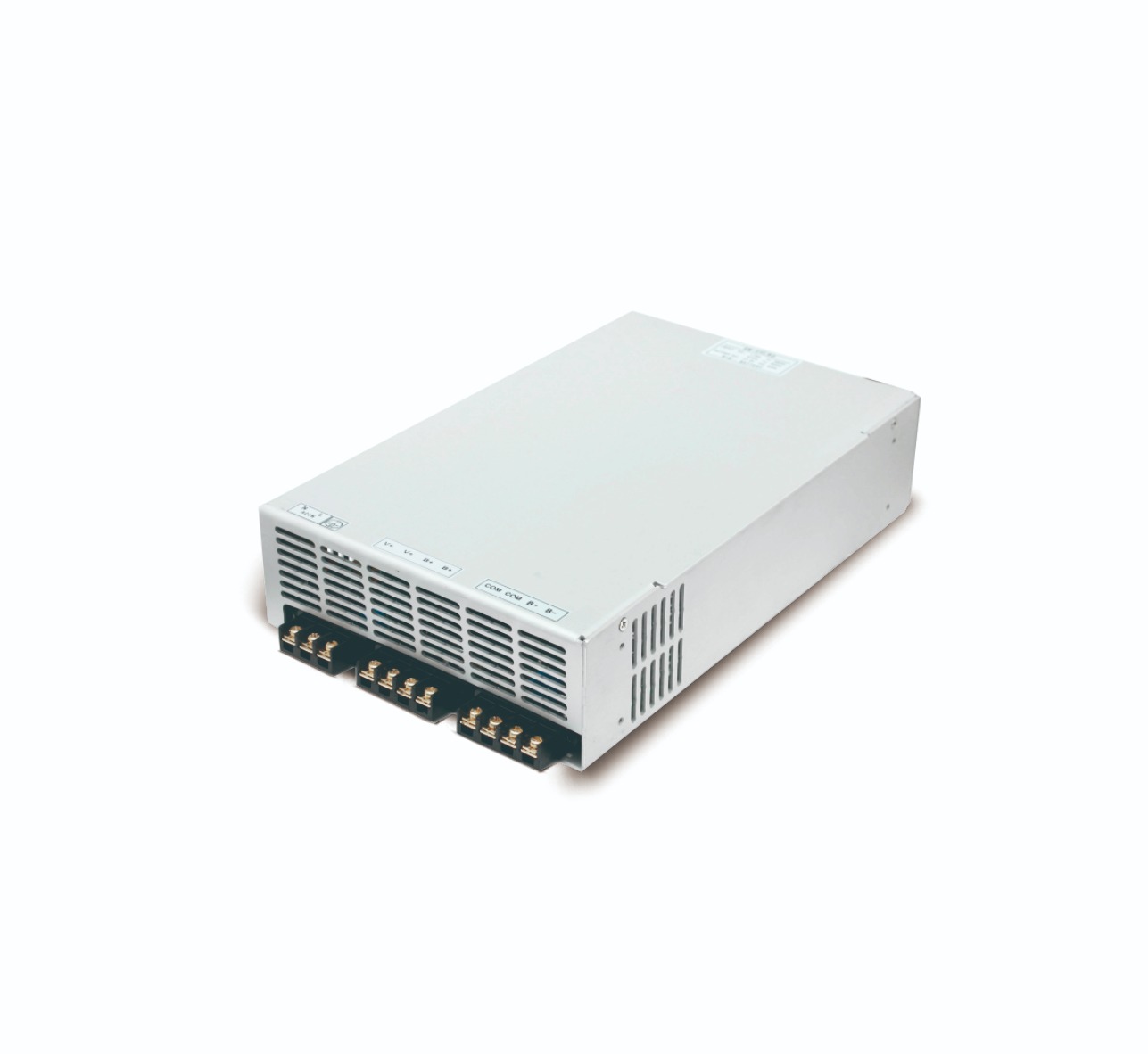
OEM manufacturers can compare available specifications before considering additional customization.
When Custom Industrial Power Supplies Are Worth Considering
Customization becomes useful when existing power supplies cannot meet essential equipment requirements. Electrical compatibility and installation restrictions are two common reasons.
Electrical Requirements Beyond Existing Models
Industrial machines may have specific output voltage, current, or load requirements.
An existing model might support the required AC input but lack a suitable DC output configuration. Other equipment may need further evaluation of startup demand, peak load, or operating conditions.
Before requesting customization, identify the exact specifications that available products cannot meet.
GVE supports OEM/ODM discussions involving customized electrical configurations. Feasibility depends on the selected model and project requirements.
Installation and Connection Limitations
Limited enclosure space, unsuitable connector positions, or mounting differences can prevent an otherwise suitable power supply from fitting equipment.
For example, changing a connector or housing arrangement may be more practical than redesigning an equipment cabinet.
GVE lists GP360 as a customized industrial power supply. Equipment manufacturers can discuss possible mechanical and electrical adjustments based on their project specifications.
Customization is most valuable when it solves a defined compatibility problem rather than adding unnecessary design changes.
Compare Total Project Cost and Production Requirements
Unit price is only one part of an OEM power supply purchase. Engineering work, installation changes, sample evaluation, and future orders can influence total project cost.
Initial Cost vs Long-Term Purchasing Cost
Standard power supplies may reduce initial expenses when existing specifications match equipment requirements. Custom configurations can involve additional engineering and verification costs.
However, purchasing a cheaper standard model does not always reduce overall expenses.
Consider an OEM machine with limited installation space. An existing power supply may require changes to mounting positions, internal wiring, or surrounding components. A modified configuration could reduce some integration work, although its engineering cost must also be considered.
Compare both options using the same project requirements.
|
Cost Factor |
What OEM Buyers Need to Consider |
|
Product price |
Quoted cost of standard and custom configurations |
|
Engineering work |
Modifications required to the power supply or equipment |
|
Installation |
Compatibility with mounting, connectors, and available space |
|
Sample testing |
Verification required before production approval |
|
Future orders |
Cost and consistency across repeat purchases |
For recurring production, a configuration that reduces assembly difficulties may offer practical value over time. Any expected savings should be assessed against actual customization costs rather than assumed in advance.The better purchasing decision comes from comparing total project expenses, not simply choosing the lowest unit price.
Production Volume and Project Schedule
Order quantity also affects the decision.
For small initial orders, customization costs may represent a larger share of the budget. When an existing model meets all requirements, additional development may be difficult to justify.
Recurring OEM orders create different priorities. Consistent specifications, installation dimensions, and connection arrangements become important for maintaining equipment compatibility between production batches.
Project schedules deserve attention as well. Standard models may require less development, while customized configurations can involve additional engineering and sample evaluation.
Before placing an order, confirm expected purchasing volume, product availability, and delivery requirements with the manufacturer.
Choosing the Right Power Supply for Your OEM Equipment
Once technical requirements and project costs are clear, selecting between standard and custom industrial power supplies becomes easier.
Start with Equipment Requirements
Begin with electrical specifications: AC input, DC output, operating current, peak load, and expected working conditions.
Next, review installation space, mounting arrangements, connectors, and cable requirements.
These details help determine whether an existing power supply can be used without modifying the equipment.
Identify What Existing Models Cannot Meet
Compare equipment requirements with available industrial power supplies.
If a model meets electrical and mechanical specifications, proceed with sample evaluation.
If it does not, identify the specific mismatch.
A connector difference may require only a limited modification. An unsuitable output configuration may involve more extensive electrical changes.
Separating these requirements helps manufacturers evaluate customization scope and related costs.
Make the Final Purchasing Decision
|
OEM Project Situation |
Recommended Approach |
|
Existing model meets all requirements |
Evaluate a standard power supply |
|
Output specifications do not match |
Discuss electrical customization |
|
Connector or housing does not fit |
Review mechanical modification options |
|
Initial order is small |
Compare development costs carefully |
|
Equipment requires recurring production |
Consider long-term configuration consistency |
|
Project schedule is limited |
Confirm availability and verification requirements |
After selecting a possible solution, evaluate sample performance under the equipment's intended operating conditions.
Testing should cover relevant electrical performance, thermal behavior, protection functions, and installation compatibility. Approved specifications should then be documented for future orders.
Choose the configuration that meets equipment requirements while keeping engineering work, purchasing costs, and production risks manageable.
GVE Industrial Power Supply Solutions for OEM Projects
Founded in 1999, GVE manufactures AC/DC power supply products for industrial applications.
Its industrial product range includes GP3000, GM1500, GM800, GP500, GP360, and GP250 series, with different electrical ratings and physical dimensions.
GVE also supports OEM/ODM customization discussions involving output configurations, connectors, and housing requirements. Available modifications depend on the selected model and project specifications.OEM manufacturers can review GVE industrial power supplies or provide their equipment requirements for further discussion.
Conclusion
Standard and custom industrial power supplies serve different OEM equipment needs. GVE offers industrial AC/DC power supply solutions and OEM/ODM customization. Contact GVE to discuss your project and request a quotation.
FAQs
Is a Custom Industrial Power Supply Always More Expensive?
Not necessarily. Customization may involve engineering and verification costs, but equipment integration and purchasing volume also affect total expenses.
Can GVE Modify an Existing Industrial Power Supply?
GVE supports OEM/ODM customization discussions. Possible modifications depend on the selected model, electrical specifications, and mechanical requirements.
Which Option Is Better for Large OEM Production Orders?
Both can be suitable. Standard models work when existing specifications match equipment needs. Custom configurations may be worth considering when recurring production requires specifications that available models cannot meet.
What Information Does GVE Need for an OEM Power Supply Quotation?
Provide equipment application, input and output specifications, load requirements, installation dimensions, connector details, and estimated order quantity. Contact GVE to discuss available options.