


How to Design a Universal Power System for Medical vs Industrial Environments
Introduction
Standardizing a single power supply SKU across healthcare and factory environments lowers Bill of Materials (BOM) costs and streamlines global inventory management. However, this strategy introduces a challenging engineering paradox: industrial settings demand extreme ruggedness and high tolerance for heavy electromagnetic interference (EMI) noise, while medical applications enforce uncompromising patient safety mandates and zero-tolerance leakage current thresholds. This technical guide provides a systematic roadmap for hardware architects aiming to design a high-performance ac to dc converter that bridges these distinct design philosophies, delivering a versatile power supply for industrial automation that simultaneously complies with stringent healthcare instrumentation laws.
Regulatory Alignment: Merging Two Strict Standards
Medical Safety Baseline (IEC 60601-1)
Harmonized safety infrastructure dictates that medical electrical equipment must eliminate any potential hazard to patients or operators. Under the comprehensive IEC 60601-1 standard, protection mechanisms are classified into Means of Patient Protection (MOPP) and Means of Operator Protection (MOOP). While MOOP relies on standard safety criteria appropriate for general laboratory or information technology hardware where the user is healthy and trained, MOPP demands far more rigorous isolation layers because patients may be unconscious, vulnerable, or have compromised skin resistance during diagnostic procedures.
Engineering a universal power system requires a firm commitment to the highest 2xMOPP classification. Implementing a lesser architecture restricts the hardware from operating near the patient care vicinity, defeating the purpose of standardization. Achieving 2xMOPP status requires the power supply to sustain a dielectric breakdown test of 4000 VAC, while maintaining specific physical separation distances along the surfaces of insulating materials.
Industrial Ruggedness Standards (IEC 62368-1 & UL 508)
Factory floor equipment must comply with distinct safety regulations centered around high voltage handling and physical durability. The transition from older ICT equipment frameworks to the hazards-based safety engineering logic of IEC 62368-1 demands that a power supply for industrial automation categorize energy sources and implement safeguards appropriate to those energy levels. Additionally, heavy machinery deployment frequently requires compliance with UL 508, which governs industrial control panels and places extreme emphasis on short-circuit current ratings, overcurrent protection, and robust environmental enclosures.
Overlapping pathways exist between these regulatory frameworks, primarily concerning structural flame retardancy and basic component reliability. However, unique blind spots remain across both domains. For instance, IEC 60601-1 requires detailed Risk Management Files according to ISO 14971, which are entirely absent from industrial compliance workflows. Conversely, UL 508 requires specific testing under high ambient vibration and severe thermal cycling, which standard medical certifications might overlook.
The Compliance Matrix
To harmonize these demands, the physical layout must accommodate the maximum requirement found across both domains. The following table maps the critical operational parameters to establish a unified design baseline:
|
Design Parameter |
Medical Baseline (IEC 60601-1 2xMOPP) |
Industrial Baseline (IEC 62368-1 / UL 508) |
Unified System Target |
|
Dielectric Isolation |
Four Thousand Volts AC |
Two Thousand Five Hundred Volts AC |
Four Thousand Volts AC |
|
Creepage Distance |
Eight millimeters minimum |
Six point three millimeters minimum |
Eight millimeters minimum |
|
Air Clearance |
Five millimeters minimum |
Four millimeters minimum |
Five millimeters minimum |
|
Maximum Leakage Current |
One hundred microamps maximum |
Three point five milliamps maximum |
One hundred microamps maximum |
|
Surge Immunity |
Two kilovolts |
Four kilovolts |
Four kilovolts |
|
Operating Temperature |
Zero to forty degrees Celsius |
Minus forty to seventy degrees Celsius |
Minus forty to seventy degrees Celsius |
Isolation & Leakage Current: Resolving the Ultimate Tradeoff
The Leakage Current Dilemma
Managing safety current limits alongside electromagnetic compatibility represents a significant challenge in cross-industry development. Typical industrial ac to dc converter architectures utilize large line-to-ground bypass capacitors, commonly known as Y-capacitors, to divert high-frequency common-mode noise safely to the earth channel. While this approach effectively resolves industrial emissions issues, it inherently allows alternating current to flow through the ground path due to the fundamental capacitive reactance at fifty hertz or sixty hertz.
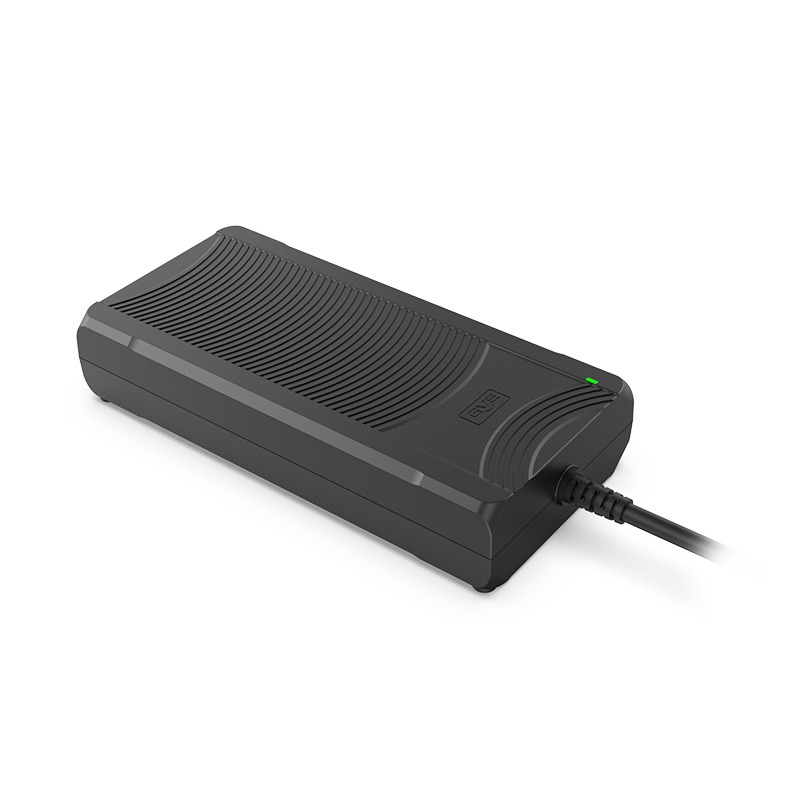
Because human cardiac tissue is highly sensitive to stray microcurrents, clinical instruments restrict touch and patient leakage current to a strict maximum of one hundred microamps. Standard industrial EMI filters routinely exceed this limit by a factor of thirty. To resolve this conflict, the front-end layout can utilize a multi-stage low-leakage filter topology that relies on larger common-mode chokes with high permeability cores, reducing dependence on high-capacitance Y-capacitors while suppressing noise. Alternatively, implementing an internal hardware jumper-configurable capacitive ground return allows factory technicians to engage or disengage specific grounding capacitors depending on the final target deployment field.
Physical Creepage and Clearance Optimization
Meeting the mandatory eight-millimeter creepage and five-millimeter clearance requirements for a 2xMOPP system requires meticulous PCB routing. Standard automated layout tools often optimize for space, which can inadvertently compromise safety margins near high-voltage nodes. Incorporating physical routing isolation slots, or routing milled air gaps directly through the FR4 fiberglass substrate between the primary and secondary sections, effectively prevents surface tracking issues under humid conditions.
Magnetic component selection must mirror these physical layout choices, as off-the-shelf industrial transformers rarely provide sufficient internal spacing. Utilizing Triple Insulated Wires for the primary or secondary windings ensures that three distinct, certified layers of insulation protect against catastrophic dielectric breakdown. When combined with a split-bobbin transformer geometry, where primary and secondary windings occupy physically separated chambers on the core, the transformer achieves superior isolation while maintaining a compact footprint.
EMC Mastery: Surviving Industrial Noise while Meeting Medical Quietness Limits
Immunity (The Industrial Shield)
Industrial power grids suffer from substantial electrical noise, characterized by high-energy voltage transients, sudden grid dips, and significant inductive spikes from large motor start-ups. A power supply for industrial automation must incorporate an exceptionally resilient front-end surge protection stage. Relying solely on low-cost metal oxide varistors often proves insufficient for long-term survival under severe factory conditions.
To survive the rigorous IEC 61000-4-5 Level 4 surge testing, which delivers a four-kilovolt pulse between line and earth, a coordinated protection scheme is required. Placing a robust metal oxide varistor in series with a gas discharge tube prevents continuous leakage through the varistor during normal operation while providing a highly effective path for high-energy surges. This protective input network shields the sensitive downstream semiconductor switches of the ac to dc converter from overvoltage breakdown.
Emission (The Medical Silence)
While the front end resists incoming external noise, the internal switching circuitry must limit its own high-frequency emissions. Clinical imaging systems, patient monitors, and laboratory analyzers operate on microvolt-level signals that are highly vulnerable to local radio frequency interference. Consequently, a universal power system must comply with the strict CISPR 11 / EN 55011 Class B standard, which permits less than half the radiated noise energy allowed under industrial Class A guidelines.
Controlling these emissions requires careful PCB layout execution and precise component tuning. Designing compact loop areas for high-frequency switching paths prevents the circuit traces from acting as miniature loop antennas. Additionally, implementing precise gate drive damping resistors slows down the turn-on transitions of the power MOSFETs, reducing high-frequency ringing at the cost of minimal switching losses. Integrating a primary controller with frequency jittering capability further spreads the concentrated switching energy across a wider frequency band, lowering peak conducted EMI values to clear the Class B margin comfortably.
Thermal Management and Component Derating
The Fanless Dilemma
Thermal management reveals another major operational difference between clinical and factory installations. Healthcare environments demand quiet operation, minimal air turbulence to prevent the spread of airborne pathogens, and high reliability without mechanical wear, making cooling fans highly undesirable in patient areas. Meanwhile, industrial environments are often filled with airborne oil mists, conductive dust, and corrosive particulates that quickly jam mechanical fan bearings, leading to premature thermal failure.
Resolving this requires choosing highly efficient power conversion topologies. Implementing an LLC resonant converter or an Active Clamp Flyback architecture minimizes switching losses by enabling Zero Voltage Switching across the entire load spectrum. Achieving high efficiency ratings minimizes residual heat generation, allowing engineers to transition from active forced-air cooling to fully enclosed, fanless chassis designs that rely entirely on conduction and natural convection through heavy aluminum heat spreaders.
Critical Component Lifecycle
To guarantee a Mean Time Between Failures exceeding five hundred thousand hours under harsh operational stresses, component selection must follow strict derating guidelines. Electrolytic capacitors represent the primary wear-out mechanism in switch-mode power conversion, so specifying exclusively high-temperature rated, ultra-low ESR aluminum electrolytic capacitors ensures extended life even when operating at elevated internal temperatures.
Semiconductor junction temperatures should also be managed conservatively to prevent failure under extreme conditions. Maintaining a maximum junction temperature limit of one hundred and ten degrees Celsius under worst-case ambient conditions, such as seventy degrees Celsius factory limits, provides comfortable headroom well below the standard silicon rating of one hundred and fifty degrees Celsius. This thermal buffer protects the primary switching transistors from premature aging induced by continuous thermal stress.
Commercial Viability: The Modular Architecture Approach
The Cost Premium Challenge
The primary obstacle to adopting a universal power system is financial rather than technical. Over-engineering a high-volume industrial product with expensive 2xMOPP medical isolation layers can price the device out of competitive, cost-sensitive factory automation markets. Industrial buyers rarely want to pay a premium for compliance certifications that their specific applications do not require.
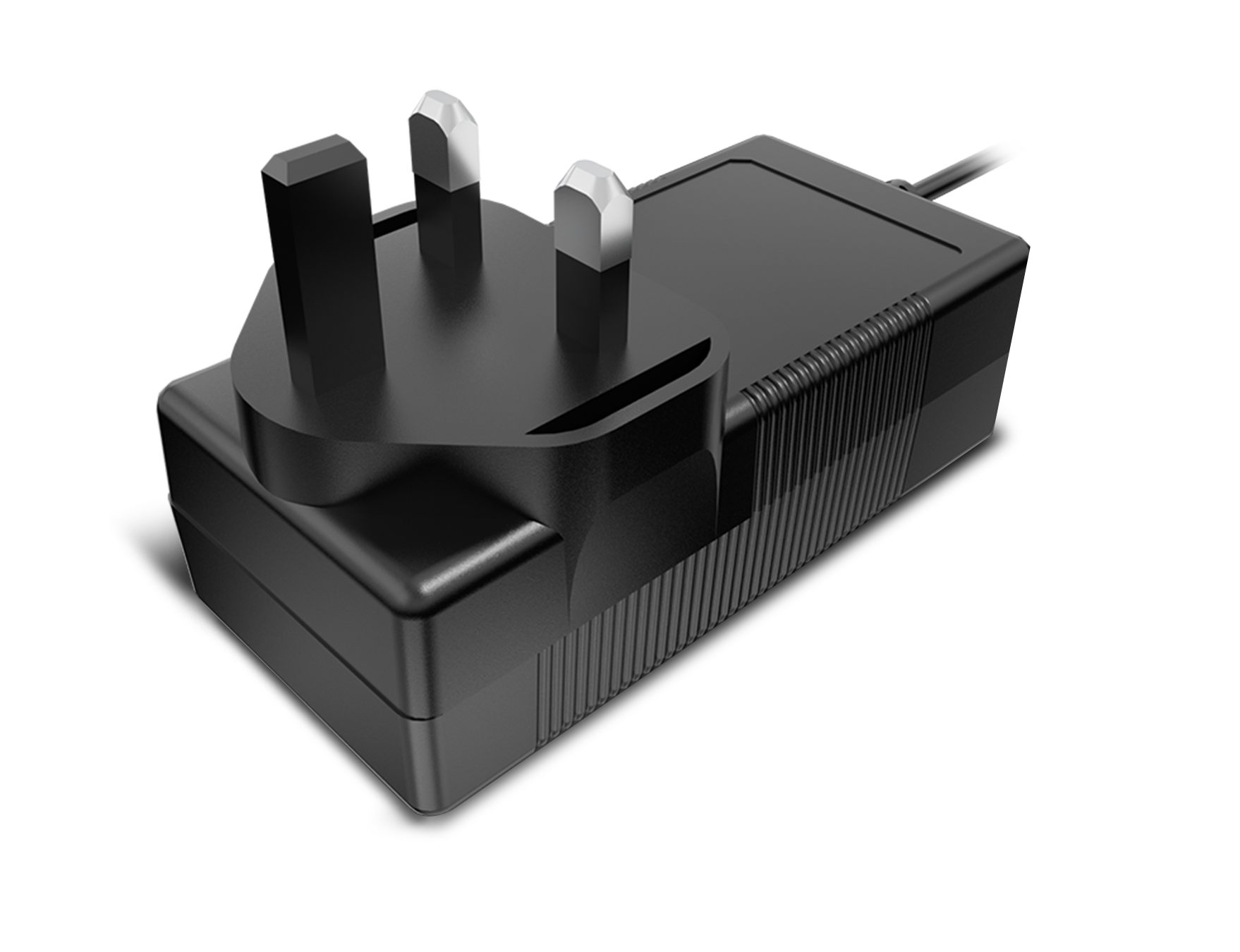
To manage this cost premium, designers must optimize the structural architecture rather than manufacturing completely separate units, which eliminates the economies of scale that standardizing on a single SKU provides. The ideal approach uses a highly standardized assembly process that minimizes manual labor and leverages common high-volume components across all target markets.
The Motherboard and Daughterboard Topology
A practical methodology to balance these competing requirements utilizes a modular engineering architecture. By developing a unified motherboard that contains the primary power stage, the main transformer designed to 2xMOPP physical spacing requirements, and the low-voltage secondary control circuits, the core platform remains completely identical for every build. This high-volume core maximizes manufacturing efficiency and reduces base component costs.
Tailoring the system for specific market sectors is achieved through pluggable daughterboards that alter the layout functions. For medical applications, the unit is populated with a daughterboard containing low-leakage EMI filtering networks and highly isolated optocouplers. For factory applications, production line technicians substitute an industrial daughterboard equipped with heavy-duty surge protection varistors, DIN-rail mounting clips, and rugged signaling relays. This modular strategy allows a single core line to fulfill diverse applications without carrying the financial burden of unnecessary components.
Conclusion
Designing a single, high-efficiency power converter that seamlessly bridges medical 2xMOPP isolation barriers with industrial-grade surge immunity streamlines the global B2B supply chain while ensuring uncompromising system safety. As a leading high-tech manufacturer specializing in advanced switching power supplies, GVE delivers world-class, globally certified switching power solutions engineered to maximize energy efficiency and operational reliability across demanding automation and healthcare fields. Contact the engineering team at GVE today to optimize your platform with customizable, cross-industry power architectures.